
Back to ResourcesPulmonary/Critical Care Medicine
Non-Invasive Ventilation: A Comprehensive Guide
Health education · AI-assisted
Dr. T Akil Rao•October 17, 2026•0 views
Introduction
Non-invasive ventilation (NIV) is a method used to assist patients with breathing difficulties without the need for intubation. This process uses a mask or similar device to support ventilation, making it a less intrusive option compared to traditional mechanical ventilation. This article provides a detailed overview of NIV, including its uses, benefits, and what patients can expect during the procedure.
What is Non-Invasive Ventilation?
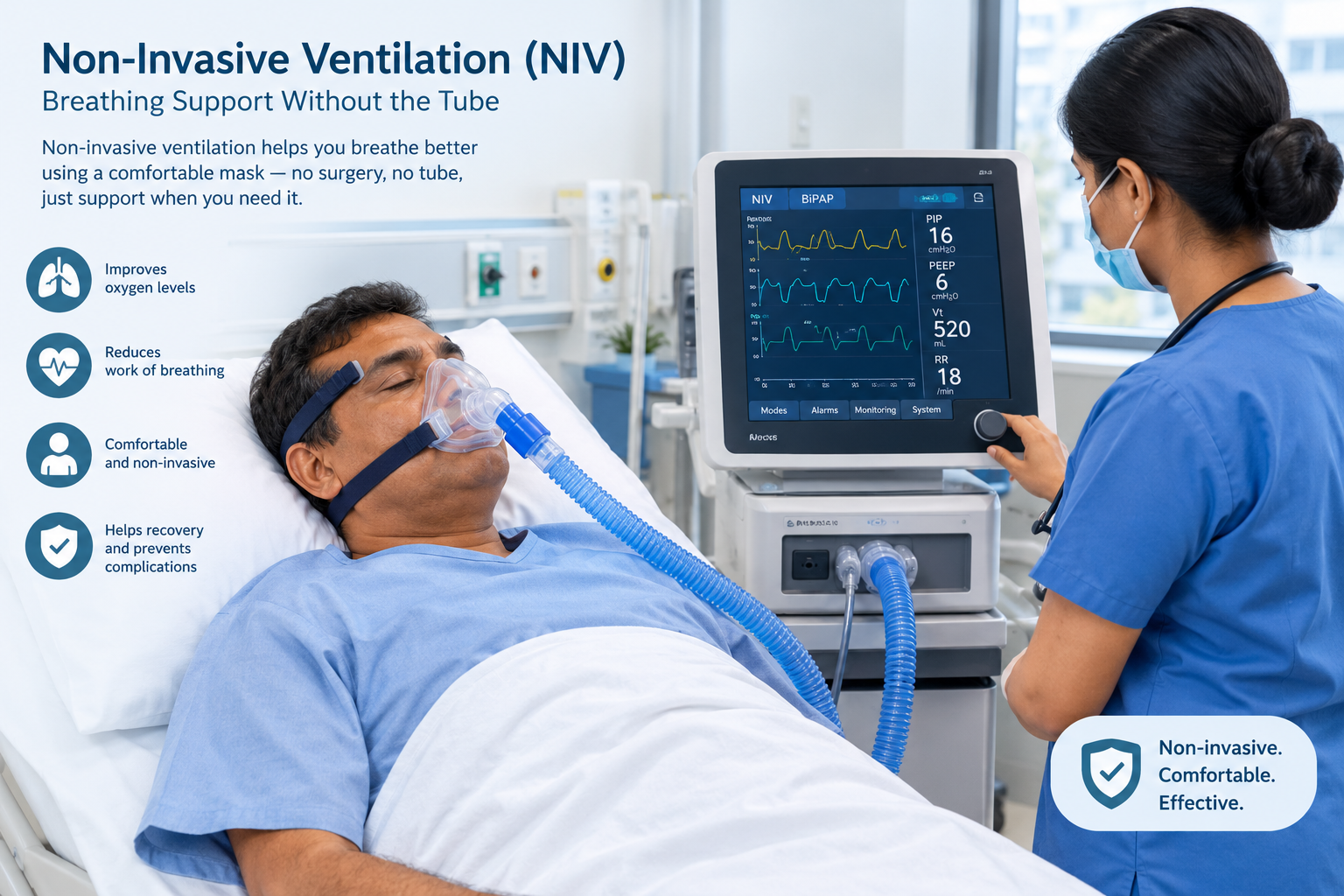
Non-invasive ventilation is a technique that supports breathing using a mask or nasal device. It helps patients by providing air pressure to keep the airways open and improve oxygenation. Unlike invasive methods, NIV does not require a tube to be inserted into the patient's airway, reducing the risk of infection and discomfort.
Why is Non-Invasive Ventilation Used?
NIV is commonly used for patients experiencing respiratory failure or difficulty breathing due to conditions such as chronic obstructive pulmonary disease (COPD), asthma, or sleep apnea. It is particularly beneficial for patients who need temporary respiratory support or those who are not candidates for invasive ventilation.
When is Non-Invasive Ventilation Recommended?
Doctors may recommend NIV for patients with acute respiratory distress, exacerbations of COPD, or during the management of sleep apnea. It is also used in cases where patients require breathing support post-surgery or during recovery from respiratory infections.
When is Non-Invasive Ventilation Not Appropriate?
NIV may not be suitable for patients with severe respiratory distress requiring immediate intubation, those with facial injuries that prevent mask fitting, or patients unable to protect their airway due to reduced consciousness.
How Does Non-Invasive Ventilation Work?
NIV works by delivering pressurized air through a mask, which helps keep the airways open and supports the lungs in taking in oxygen and expelling carbon dioxide. The machine adjusts the airflow based on the patient's breathing pattern, ensuring optimal support.
What Happens During Non-Invasive Ventilation?
During NIV, a healthcare professional will fit a mask over the patient's nose and/or mouth. The mask is connected to a ventilator that delivers pressurized air. Patients are monitored closely to ensure the mask fits properly and the ventilation settings are effective.
Preparation for Non-Invasive Ventilation
Before starting NIV, patients may undergo a thorough assessment to determine the appropriate mask size and ventilator settings. Patients should inform their healthcare provider about any discomfort or issues with the mask fit.
Risks and Complications of Non-Invasive Ventilation
While NIV is generally safe, some patients may experience skin irritation from the mask, discomfort, or dryness in the airways. In rare cases, patients may develop gastric distension or aspiration if the mask fit is not optimal.
What to Expect After Non-Invasive Ventilation
Following NIV, patients may feel relief from breathing difficulties. Healthcare providers will continue to monitor the patient's respiratory status and adjust the treatment plan as needed. Most patients can resume normal activities once their breathing stabilizes.
Outcomes of Non-Invasive Ventilation
NIV can significantly improve breathing and oxygenation in patients with respiratory distress. It often reduces the need for more invasive procedures and can shorten hospital stays.
Alternatives to Non-Invasive Ventilation
In cases where NIV is not effective or suitable, alternatives such as invasive mechanical ventilation or supplemental oxygen therapy may be considered.
About Dr. T Akil Rao
Dr. T Akil Rao is a dedicated Pulmonary/Critical Care Specialist with expertise in managing respiratory conditions such as asthma, COPD, and lung cancer. With a focus on personalized treatment plans, Dr. Rao provides comprehensive care tailored to each patient's needs at Gajendra Chest And Maternity Centre in Bellary, Karnataka.
Consultation and Next Steps
For individuals experiencing respiratory issues or seeking more information on non-invasive ventilation, consulting with a specialist like Dr. T Akil Rao can provide valuable guidance and treatment options.
FAQs: Clear Answers for Patients
Q1.What is the difference between invasive and non-invasive ventilation?
Non-invasive ventilation does not require intubation, making it less intrusive and reducing the risk of infection.
Q2.Can non-invasive ventilation be used at home?
Yes, NIV can be used at home for chronic conditions like sleep apnea, under medical supervision.
Q3.How long can a patient be on non-invasive ventilation?
The duration varies based on the patient's condition and response to treatment. It can be temporary or long-term.
Q4.Is non-invasive ventilation painful?
NIV is generally not painful, but some patients may experience discomfort from the mask.
Q5.What should I do if I experience discomfort during NIV?
Inform your healthcare provider immediately to adjust the mask fit or ventilation settings.
Ready to book an appointment?
Consult with Dr. T Akil Rao.
Book an appointment