
Back to ResourcesPulmonary/Critical Care Medicine
What Is Chest Tube Insertion?
Health education · AI-assisted
Dr. T Akil Rao•October 16, 2026•0 views
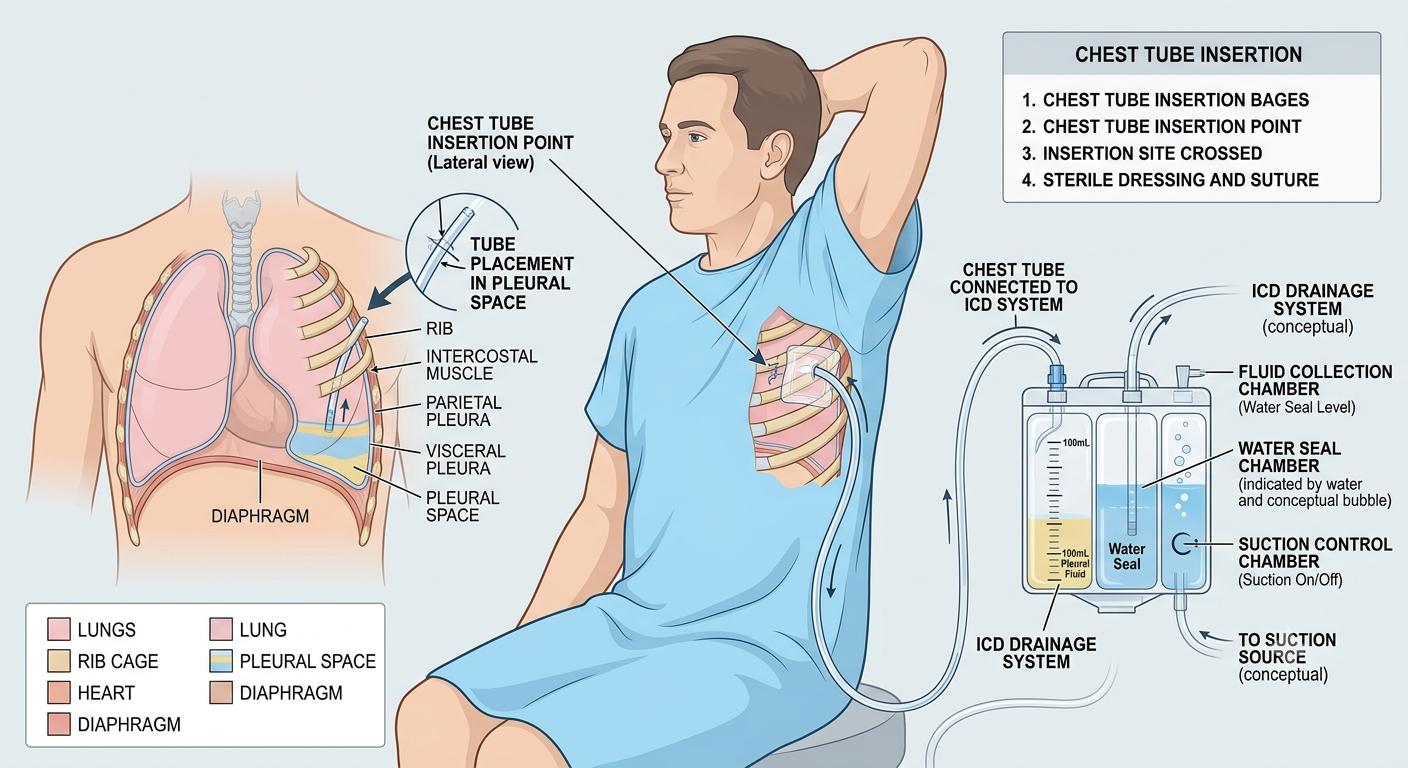
Chest Tube Insertion: Understanding the Procedure
Chest tube insertion is a medical procedure used to remove air, fluid, or pus from the pleural space—the area between the lungs and the chest wall. This procedure is crucial for patients experiencing conditions such as pneumothorax, pleural effusion, or empyema, where the accumulation of these substances can impair breathing and cause discomfort.
Chest tube insertion, also known as thoracostomy, involves placing a flexible tube into the pleural space to evacuate air, fluid, or pus. This helps re-expand the lung and restore normal breathing function.
Why Is Chest Tube Insertion Used?
This procedure is primarily used to treat conditions that cause the accumulation of air or fluid in the pleural space, such as:
- Pneumothorax: Air leaks into the pleural space, causing lung collapse.
- Pleural Effusion: Excess fluid builds up in the pleural space.
- Empyema: Pus accumulates due to infection.
When Is Chest Tube Insertion Recommended?
Chest tube insertion is recommended when a patient presents with symptoms such as difficulty breathing, chest pain, or decreased oxygen levels due to fluid or air in the pleural space. It is often performed in emergency settings or as part of post-surgical care.
When Is Chest Tube Insertion Not Appropriate?
This procedure may not be suitable for patients with certain bleeding disorders or those who cannot tolerate the procedure due to other medical conditions. A thorough evaluation by a healthcare provider is essential.
How Does Chest Tube Insertion Work?
The procedure involves the following steps:
1. Preparation: The patient is positioned, and the insertion site is sterilized.
2. Local Anesthesia: Administered to minimize discomfort.
3. Insertion: A small incision is made, and the tube is gently inserted into the pleural space.
4. Securing the Tube: The tube is secured in place to prevent dislodgement.
5. Drainage: The tube is connected to a drainage system to remove air or fluid.
What Happens During the Procedure?
During chest tube insertion, patients are typically awake but sedated. The healthcare provider will monitor vital signs throughout the process. The procedure usually takes about 30 to 60 minutes.
Preparation for Chest Tube Insertion
Patients may need to undergo imaging tests such as X-rays or CT scans to assess the extent of air or fluid accumulation. Fasting may be required if sedation is planned.
Risks and Complications
While generally safe, chest tube insertion carries some risks, including:
- Infection
- Bleeding
- Injury to nearby organs
- Tube dislodgement
What to Expect After Chest Tube Insertion
Post-procedure, patients are monitored for signs of complications. The chest tube remains in place until the underlying condition is resolved. Pain management and regular dressing changes are part of the care routine.
Outcomes of Chest Tube Insertion
Successful chest tube insertion can significantly improve breathing and alleviate symptoms associated with pleural space conditions. Follow-up care is essential to ensure full recovery.
Alternatives to Chest Tube Insertion
In some cases, needle aspiration or surgical intervention may be considered as alternatives, depending on the patient's condition and response to treatment.
About Dr. T Akil Rao
Dr. T Akil Rao is a skilled specialist in pulmonary and critical care medicine, with a commitment to providing comprehensive care for patients with respiratory conditions. His expertise includes managing complex cases requiring chest tube insertion.
Consultation and Next Steps
If you experience symptoms related to pleural space conditions, consult a specialist to discuss your options. Dr. T Akil Rao is available for consultations at Gajendra Chest and Maternity Centre in Bellary.
1. How long does a chest tube stay in place?
The duration varies depending on the condition being treated. It can range from a few days to a week or more.
2. Is chest tube insertion painful?
Local anesthesia is used to minimize pain during insertion, but some discomfort may occur.
3. Can I move around with a chest tube?
Limited movement is allowed, but it's important to follow medical advice to prevent complications.
4. What should I do if the chest tube becomes dislodged?
Seek immediate medical attention if the chest tube moves or falls out.
5. Are there any long-term effects of having a chest tube?
Most patients recover fully without long-term effects, but follow-up care is important.
Ready to book an appointment?
Consult with Dr. T Akil Rao.
Book an appointment